Google Maps case study
Lighthouse Point, FL
Lighthouse Dental Care
#11 → #1 on Maps in 14 Days!
#1 map ranking for “lighthouse point dentist”
Google
lighthouse point dentist
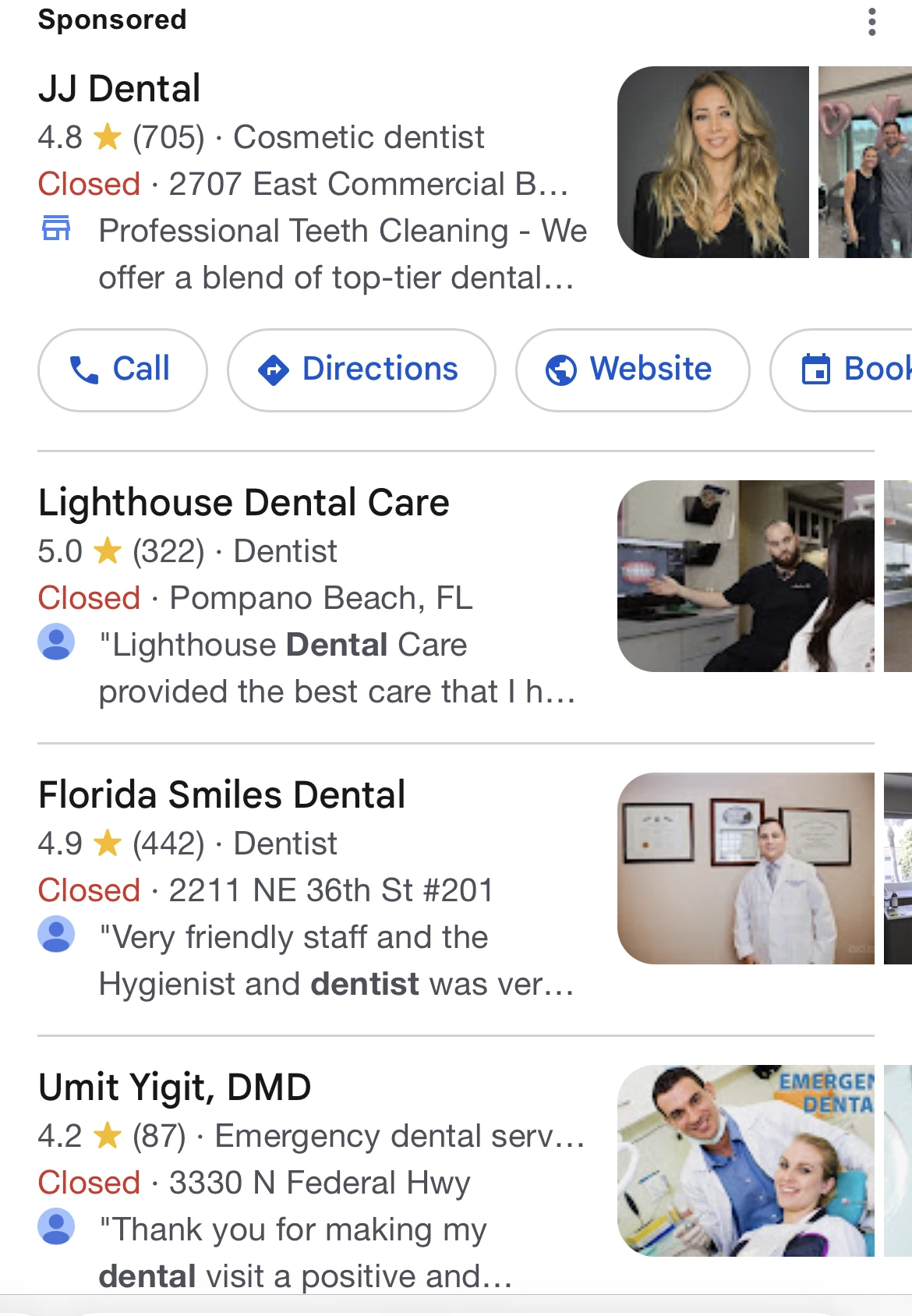
Google Maps case study
Lighthouse Point, FL
#11 → #1 on Maps in 14 Days!
#1 map ranking for “lighthouse point dentist”
Tell us a little about your practice. We'll follow up with a search growth plan—no commitment required.
We don't do generic marketing. We build healthcare SEO systems that rank practices on Google, strengthen local search visibility, and get them discovered in Google AI Overviews, ChatGPT, and Perplexity — tailored to the economics, specialties, and compliance realities of healthcare.
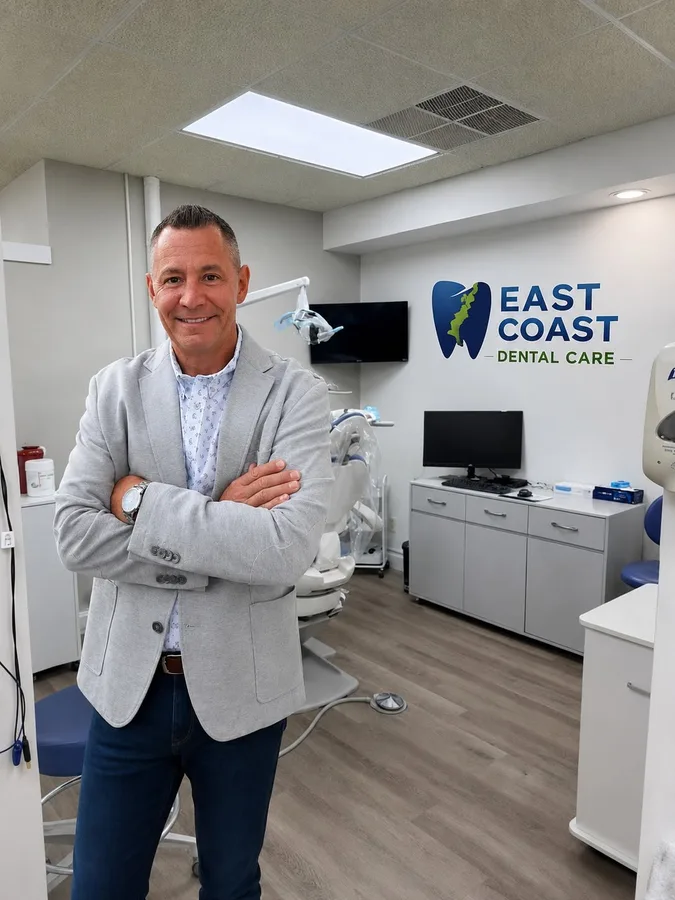
Featured Testimonial
East Coast Dental Care
“I have had the pleasure of working with Dave on several Dental Offices in and throughout Massachusetts. Dave was instrumental in helping build a De Novo, from ZERO patients day 1 to 4,000+ in a matter of 2½ years. Every practice website we have worked on together was ranked on 1st page within 90 days. He is a master at his craft! Highly Recommended!”
Thomas G.
7 years ago
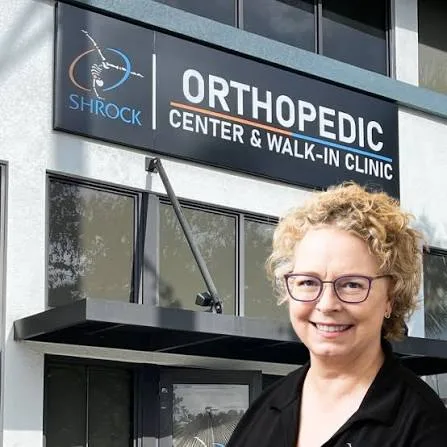
Featured Testimonial
Shrock Orthopedic
“Dave has been doing a stellar job for our businesses and I cannot even begin to tell you all the great things that have happened for us since we started working with him. He is a true professional who knows his stuff. He continues to drive new patients to us and he really boosts our practices. He is always available when we need him; he's very responsive; he's creative and always has great ideas for us. He's a problem solver and a proactive person. We wholeheartedly endorse and recommend him and his services. Hire him and his company and it'll be the best move you've made for your practice.”
Natalie S.
5 years ago
Clicks are only part of the picture. Here are the conversion, cost, and search results behind the work.
Google Ads Conversions (+50% vs. Prior Week)
Jersey City Search Campaign
Timeframe: September 19–25
Cost per Google Ads Conversion (−30% vs. Prior Week)
Jersey City Search Campaign
Timeframe: September 19–25
Clickthrough Rate (+5% vs. Prior Week)
Jersey City Search Campaign
Timeframe: September 19–25
Increase in Organic Leads
Multi-Location Dental Group
Timeframe: 12 Months
Local Map Pack Ranking
Dental Practice
Timeframe: 3 weeks
Increase in Consult Volume
Luxury Medical Spa
Timeframe: 9 Months
Google Ads figures are from the September 19–25 weekly report, compared with the previous week. “Conversions” are Google Ads-reported conversions, not confirmed booked appointments. See the campaign screenshots and full case study
Every result below is a real client, a real market, and a real competitive keyword.
#1 on Google for "Fort Lauderdale Dentist"
Fort Lauderdale's most competitive dental keyword. We took it. Stanton Smiles now owns #1 organic and the map pack — pulling in cosmetic dentistry patients that used to go to the competition.
#1 on Google for "Dentist Sunrise"
Went from buried in local search to owning the top organic and map pack position — capturing the highest-intent dental patients in their market.
#1 on Google for "Orthopedic Surgeon Boca Raton"
55 years of clinical excellence — finally visible online. BROG now ranks #1 for the most competitive orthopedic keyword in Palm Beach County, beating hospital systems and national chains.
From the blog
Explore guidance on Google visibility, local search, and helping patients find your practice through AI search.

Dental SEO
Learn how dental SEO can improve your practice’s visibility in Google Search and Maps and bring more qualified patients to your website.
Read article
Google Maps SEO
Ten local SEO strategies to help dental practices strengthen Google Maps visibility and turn nearby searches into patient opportunities.
Read article
AI Search
Learn how medical practices can help patients find them in ChatGPT and AI search with clear content, credible expertise, and strong technical SEO.
Read articleWe leave the guesswork to the amateurs. Our approach is systematic, data-backed, and relentlessly focused on revenue-generating actions.
We don't just write blogs. We rebuild your site's architecture to match exactly how patients and search engines look for your specific treatments and conditions. Full technical optimization for speed, schema markup, and compliance.
For clinics, geography is destiny. We aggressively optimize your local footprint so when someone within a 20-mile radius searches for your specialty, you dominate the map pack. No exceptions.
Google AI Overviews, ChatGPT, Perplexity, and Bing Copilot now answer healthcare questions by citing specific practices. We optimize your entity authority, structured data, and answer-ready content so your practice gets recommended — not your competitor's.
GEO & AEO
Google AI Overviews, ChatGPT, Perplexity, and Bing Copilot now answer healthcare questions directly — and they cite specific practices by name. We make sure that practice is yours.
Search query
"best orthopedic surgeon in boca raton"
Based on patient reviews, credentials, and online reputation, Boca Raton Orthopaedic Group (BROG) is consistently cited as a top orthopedic practice in the area. They specialize in joint replacement, sports medicine, and ACL reconstruction, with board-certified surgeons and over 300 five-star reviews. Their practice has served Southeast Florida since 1969.
↑ Patient Sprout clients appear in AI responses like this across all major platforms.
AI models cite sources they trust. We build the structured data, authorship signals, and cross-web mentions that make your practice a recognized healthcare authority — the kind LLMs pull from.
AI Overviews and chatbots are built to extract concise answers. We format your procedure pages, FAQs, and service descriptions exactly how LLMs parse and reproduce information in their responses.
LLMs are trained on the web. We systematically get your practice cited in the directories, publications, and health platforms that AI models treat as authoritative sources.
Included in all Patient Sprout plans — not an add-on.
See How We Rank You in AI SearchAI chat integration
Your website gets visitors around the clock. Give them a way to get answers, take the next step, and start the intake process—even when your front desk is busy or your office is closed.

Over 70% of high-intent patients choose one of the top three practices in the Google Map Pack. If you aren't in the top 3, your competitors are getting your patients. We engineer local authority to ensure you own your radius.
Explore Google Maps optimizationComplete technical optimization of your GBP, targeting the exact high-value procedure categories your patients are searching for.
Automated, compliant workflows to capture 5-star reviews consistently, sending massive local trust signals to Google's algorithm.
We don't report on vanity metrics. We measure absolute patient volume: inbound phone calls and GPS direction requests.
Top-rated ⋅ Specialists
Average increase in direct phone calls
Flat monthly retainers. No setup fees. No long-term lock-in. Cancel any time.
Plant your flag.
For single-location practices ready to establish local search presence and start winning new patients.
Dominate your market.
For growing practices and multi-specialty groups competing for high-value procedures in competitive markets.
Own the category.
For multi-location groups, clinical trial sponsors, and brands that need to own search across an entire region or specialty.
All plans include onboarding, initial audit, a dedicated growth strategist, and AI Overviews optimization. Pricing shown in USD.
FAQ
Straight answers — no sales spin.
Most practices see measurable ranking improvements within 60–90 days. Meaningful traffic and new patient growth typically follows within 3–6 months. The difference with Patient Sprout: once rankings are earned, they hold — Stanton Smiles Dentistry has maintained Position #1 for over 5 years. SEO is not a sprint; it is a compounding asset that grows in value every month you invest in it.
No ethical SEO provider can guarantee a specific ranking — Google's algorithm is outside anyone's control. What we do guarantee is a proven system: the same methodology that has helped healthcare practices compete in competitive local markets. We show you real proof — actual client rankings, traffic values, and revenue numbers — before you commit to anything.
Ads stop the moment you stop paying. SEO compounds. A practice ranking #1 organically receives 10–20x more clicks than a paid ad at a fraction of the long-term cost. Our clients typically achieve a cost-per-lead 60–80% lower than paid search within 12 months — and unlike ad spend, those rankings do not disappear when the budget runs out. Ads are a faucet. SEO is a well.
Every month includes: technical SEO monitoring and fixes, new procedure-specific content targeting high-value searches, Google Business Profile optimization, local citation and authority building, review strategy, GEO/AEO optimization for AI search visibility, and a performance report with ranking movement. You will always know exactly what was done and what moved.
Usually one or more of three reasons: stronger technical foundation (faster site, better schema markup, cleaner crawlability), more procedure-specific content targeting the exact searches patients use, or a better-built local authority profile (Google Business Profile, citations, reviews). We analyze all three, show you the gap, and close it systematically.
Rankings earned through legitimate SEO do not disappear overnight. The content, backlinks, and authority built while working with us remain. That said, competitors are always building — maintaining dominance requires ongoing work, and a practice that stops investing will eventually be overtaken by one that does not. We are transparent about this from day one.
Three things: (1) We work exclusively with healthcare practices — we understand procedure terminology, patient intent, YMYL content standards, and local market dynamics in ways generalist agencies do not. (2) We engineer AI search visibility — GEO, AEO, and Google AI Overview optimization — alongside traditional SEO. (3) We show you real proof before you commit: actual client rankings, traffic values, and revenue numbers from practices in your specialty.
This is exactly what we are built for. Instead of targeting generic searches, we build content that captures patients actively searching for All-on-4 implants, mommy makeovers, semaglutide programs, ACL reconstruction, or clinical trial enrollment — high-intent searches that signal readiness to invest in premium treatment. The right ranking brings the right patient.
Every Patient Sprout engagement includes monthly reporting on keyword ranking positions, Google Maps pack visibility, Google Business Profile impressions and call volume, and organic traffic from local searches. You see exactly where you ranked when we started versus where you rank now. The focus is on metrics that translate to business outcomes — booked appointments and new patient inquiries — not vanity numbers like raw page views.
Yes — backlinks remain one of Google's strongest ranking signals. For healthcare practices, the most valuable links come from local publications, medical associations, hospital affiliations, and healthcare-specific directories like Healthgrades and Doximity. A single link from a regional news outlet or medical organization can outweigh dozens of generic directory links. We build real authority through digital PR, local outreach, and healthcare-specific citation sources.
Google Maps rankings are driven by three factors: relevance (does your GBP match what the patient searched?), distance (proximity to the searcher), and prominence (review volume, recency, citation consistency, and on-site authority). We engineer all three simultaneously — it is one of the highest-ROI moves in local healthcare SEO and typically shows movement faster than organic rankings.
'Near me' searches are driven almost entirely by your Google Business Profile and local relevance signals. Google surfaces practices physically near the searcher, so your GBP's accuracy, category settings, service descriptions, and review count directly determine whether you appear. Websites with location-specific procedure pages — 'dental implants in [city]' or 'orthopedic surgeon near [city]' — also rank for near-me variations. Strong GBP optimization combined with hyperlocal content is the formula.
The Google Map Pack (also called the local pack or 3-pack) is the block of three local business listings that appears at the top of Google search results — above all organic links. It shows your practice name, rating, phone number, and location instantly, and captures the majority of clicks for local healthcare searches. Getting into the top 3 requires a well-optimized Google Business Profile, consistent NAP citations, strong review velocity, and location-specific service pages on your website.
Your Google Business Profile (formerly Google My Business) controls how your practice appears in the Map Pack, Google Maps, and Google Knowledge Panels — your name, phone, hours, photos, services, and reviews. It is also a primary input for Google AI Overviews and influences how other AI platforms describe your practice. A fully optimized GBP with accurate categories, complete service descriptions, and a steady review cadence is the single most impactful first step most practices can take.
Claim your Google Business Profile at business.google.com. Fill out every field — name, specialty category, address, phone, hours, services, photos, and description. Verify your listing via postcard, phone, or video. Once live, build citations on top healthcare directories (Healthgrades, Zocdoc, WebMD, Yelp) and gather your first reviews. Within weeks you will start appearing in map results; consistent optimization over 60–90 days moves you toward the top 3.
Yes — significantly. Your Google Business Profile is one of the top ranking factors for local healthcare search. It influences your Map Pack placement, your Google Knowledge Panel, and how Google AI Overviews surface your practice. A fully optimized GBP with the right specialty categories, complete service listings, regular photos, and a steady review cadence can move a practice from page 3 to the top 3 Map results without any other changes.
Larger healthcare systems rank well for broad brand terms — but local, procedure-specific searches strongly favor relevance and proximity over size. An independent orthopedic group that owns its local search signals will regularly outrank a hospital system for 'knee replacement surgeon [city].' Hyperlocal procedure-specific content, a fully optimized Google Business Profile, and a consistent review strategy are the levers that let independent practices beat larger competitors at the local level.
Sudden ranking drops typically come from: a Google algorithm update that reweighted local signals, a suspended or penalized Google Business Profile, a recent website change that removed important content or introduced technical errors, or a competitor that significantly strengthened their own signals. Check your GBP status first for suspensions, then Google Search Console for manual actions, then audit recent site changes — one of those three will identify the cause in most cases.
A citation is any online mention of your practice's name, address, and phone number (NAP) — on directories like Yelp, Healthgrades, Zocdoc, WebMD, and hundreds of others. Consistent citations across these sources tell Google and AI search engines that your practice is legitimate, established, and located where you say it is. Inconsistent or missing citations undermine both Map Pack rankings and AI visibility. Citation consistency is foundational.
Yes. Google's Core Web Vitals — loading speed, visual stability, and interactivity — are official ranking signals. A slow website loses rankings to faster competitors, especially on mobile where most urgent healthcare queries originate. Compressing images, eliminating render-blocking scripts, and using fast hosting infrastructure are the highest-impact speed improvements for most practice websites. We audit and fix Core Web Vitals as part of every technical SEO engagement.
SEO (Search Engine Optimization) gets your practice ranking on Google's results page. GEO (Generative Engine Optimization) gets your practice cited inside AI-generated answers from ChatGPT, Perplexity, and Google AI Overviews. AEO (Answer Engine Optimization) captures voice and conversational queries. AIO (Artificial Intelligence Optimization) optimizes your entire digital presence so every AI system evaluating your practice sees a credible, trustworthy provider worth recommending. Patient Sprout optimizes all four.
Google AI Overviews are the AI-generated summaries appearing at the top of Google search results — above all traditional organic links. They directly answer questions like 'best pediatric dentist in Dallas' or 'top orthopedic surgeon for knee replacement near me' by citing specific practices by name. If a competitor is cited there and you are not, you are invisible to that patient before they ever see your website.
Yes — this is a core part of every Patient Sprout engagement. GEO and AEO are the disciplines that determine which practices AI models cite when a patient asks 'Who is the best dentist near me?' We optimize your entity authority, structured data, and answer-ready content specifically to earn those citations — and we track AI citation appearances monthly.
We optimize for the full spectrum of AI-powered search surfaces: Google AI Overviews, ChatGPT browse and recommendations, Perplexity AI, Microsoft Copilot, Apple Intelligence, and voice assistants including Siri and Alexa. Each platform uses different signals and we engineer for all of them simultaneously.
Most practices begin appearing in AI Overviews within 60–120 days of starting GEO/AEO optimization. The timeline depends on your starting authority level, local competition, and how quickly we can build the entity signals and answer-ready content that AI systems rely on. We track AI citation appearances and report on them monthly.
Yes — GEO and AEO optimization is included in every Patient Sprout plan at every tier. AI search is no longer optional: it now influences a significant and growing share of how patients discover healthcare providers. Every engagement includes structured data optimization, answer-ready content, entity authority building, and monthly AI citation monitoring.
Not yet — but the share of searches resolved directly by AI is growing fast, especially for question-based queries. The smart play is to dominate both: traditional organic rankings and AI citations reinforce each other because many of the same signals — authority, content quality, structured data, reviews — drive both. That is exactly how we approach every engagement.
ChatGPT recommends healthcare practices based on entity authority — how well-established, consistently described, and widely referenced your practice is across the internet. The core signals are: a complete and active Google Business Profile, authoritative website content clearly describing your services and location, consistent mentions in local publications and healthcare directories, a strong and recent review profile, and structured schema markup.
Practical approaches exist today: add 'how did you find us?' to your intake process. Monitor referral traffic from perplexity.ai, bing.com, and claude.ai in Google Analytics. Watch for increases in direct traffic and branded search volume. Patient Sprout reports on AI platform visibility and citation appearances monthly as part of every GEO engagement.
Structure your content around specific questions patients ask. Use clear headings that name the procedure, condition, or service. Add LocalBusiness, MedicalOrganization, and Service schema markup. Include FAQ sections with FAQPage schema. Add an llms.txt file at your domain root. Ensure Google, ClaudeBot, PerplexityBot, and GPTBot are permitted in your robots.txt. AI systems favor clear, factual, direct language over marketing copy.
For most practices, 2–6 pieces of content per month is sufficient to build topical authority without diluting quality. What matters more than frequency is relevance — each piece should target a specific procedure keyword or answer a question patients actually search. We plan and produce content based on search demand in your specific market.
Content that targets procedure-specific, high-intent searches performs best for attracting premium patients. Examples: 'cost of dental implants in [city]', 'what to expect from a mommy makeover', 'best orthopedic surgeon for ACL reconstruction near me'. These searches signal a patient who has already decided on the treatment and is choosing a provider.
Patient reviews are one of the most powerful signals in both traditional local SEO and AI search visibility. For Google Maps, review quantity, recency, and rating directly influence Map Pack rankings. For AI platforms like ChatGPT and Perplexity, review content is a primary input when assessing a practice's reputation and relevance.
There is no universal threshold — competitive context matters most. In a smaller market, 50 recent 4.5+ star reviews may dominate. In a competitive metro area, the top-ranked practices often have 200–500+ reviews. What matters most is that you maintain a steady cadence of new reviews rather than getting 50 at once and then stopping.
Yes — significantly. Review content is a primary input AI platforms use when assessing a practice's reputation and local relevance. Quantity, recency, and sentiment all matter. A practice with consistent, recent, high-quality reviews across Google, Healthgrades, and Yelp signals legitimacy and active patient satisfaction to AI systems.
E-E-A-T stands for Experience, Expertise, Authoritativeness, and Trustworthiness — the framework Google uses to evaluate content quality, with extra scrutiny applied to healthcare content. For a healthcare practice website, E-E-A-T means content written or reviewed by licensed clinicians, clear author credentials, transparent practice information, and a strong external reputation.
Schema markup is structured data code added to your website that tells search engines and AI systems exactly what your content means — your specialty, services, location, hours, credentials, and more. For healthcare practices, the most important schemas are MedicalOrganization, LocalBusiness, Service, FAQPage, and Review. Every Patient Sprout engagement includes a full schema build.
Yes — but only if the content targets real patient search demand. A blog that answers the specific questions your ideal patients type into Google (procedure costs, recovery times, comparison articles, condition explanations) builds topical authority and attracts high-intent traffic. We plan content based on actual keyword demand in your market and specialty.
Yes. Google Business Profile data is a primary input for Google AI Overviews and influences how other AI platforms describe your practice. A complete, active GBP with accurate specialty categories, rich service descriptions, regular photos, and consistent recent reviews signals to AI systems that your practice is legitimate, active, and relevant for local patient queries.
ChatGPT draws on its training data — which includes web content, business listings, reviews, and healthcare directories — as well as real-time web search. The most influential signals are your Google Business Profile, your website's procedure and location pages, review content on Google and Healthgrades, mentions in local publications, and structured schema data.
Yes. Multi-location SEO is available on our Sprout and Growth plans. Each location gets its own optimized Google Business Profile, location-specific landing pages, local citation footprint, and GEO optimization — without cannibalizing your other locations' rankings.
We run a complete analysis of your current site — technical health, keyword gaps, competitor rankings, Google Business Profile status, local authority score, and AI search visibility. You leave with a clear picture of exactly why competitors are outranking you and a specific roadmap to fix it. No commitment required.
Yes — healthcare is all we do. We work with dentists, medical specialists, med spas, longevity practices, orthopedic surgeons, plastic surgeons, and clinical trial sponsors. This focus means we understand procedure terminology, patient search intent, YMYL content standards, healthcare compliance considerations, and local market dynamics that generalist SEO agencies do not.
AI search platforms are growing fast, but Google still processes over 8 billion searches per day and remains the primary starting point for most local healthcare queries. The realistic picture: AI search is adding a new channel, not replacing Google. Practices need to be optimized for both. Patient Sprout engineers both simultaneously.
Competitive markets require a more aggressive and sustained investment — but they are also where the ROI of ranking dominance is highest. A dental practice ranking #1 in Miami for high-value implant searches is worth far more than the same ranking in a rural market. We analyze your specific competitive landscape before engagement and take on the market only if we are confident in the outcome.
Write content that directly answers specific patient questions in plain, factual language. Use FAQ-structured sections with clear question headings. Add schema markup — FAQPage, MedicalOrganization, Service. Ensure your practice is described consistently across your website, Google Business Profile, and all major healthcare directories. These signals feed all major AI platforms simultaneously.
Yes. Patient Sprout operates on monthly retainers with no long-term lock-in. We earn your business every month by delivering results. That said, SEO is a long-term investment — practices that cancel prematurely often leave before the compounding returns begin. We are transparent about timelines from day one.
We build on the same signals Google has rewarded for 20 years — authoritative content, technical site health, genuine backlinks, and strong local presence — not shortcuts that produce short-term spikes and long-term penalties. Our clients like Stanton Smiles Dentistry have held Position #1 for over 5 years because we build authority that compounds instead of decays.
Onboarding takes approximately two weeks. Week one: complete site audit, competitive analysis, keyword research, Google Business Profile assessment, and AI visibility baseline. Week two: growth roadmap, technical fixes, and first content and citation work. Most clients have their first ranking movements reported within 30 days of onboarding.
Yes — we work with practices that have experienced ranking drops from algorithm updates, GBP suspensions, or manual penalties. The process starts with diagnosing the exact cause. Recovery timelines depend on severity and how long the issue has been present. We will give you an honest assessment before we begin, including realistic timelines and probability of full restoration.
Your competitors are ranking above you right now — and every day that continues, their waiting room fills while yours doesn't. Our healthcare WordPress SEO experts uncover the technical, content, and local search issues holding your WordPress website back, then build the system that puts your practice above them permanently.
Tell us a little about your practice. We'll follow up with a search growth plan—no commitment required.